When calculating PCB, income is grouped into either Fixed or Additional income tax base:
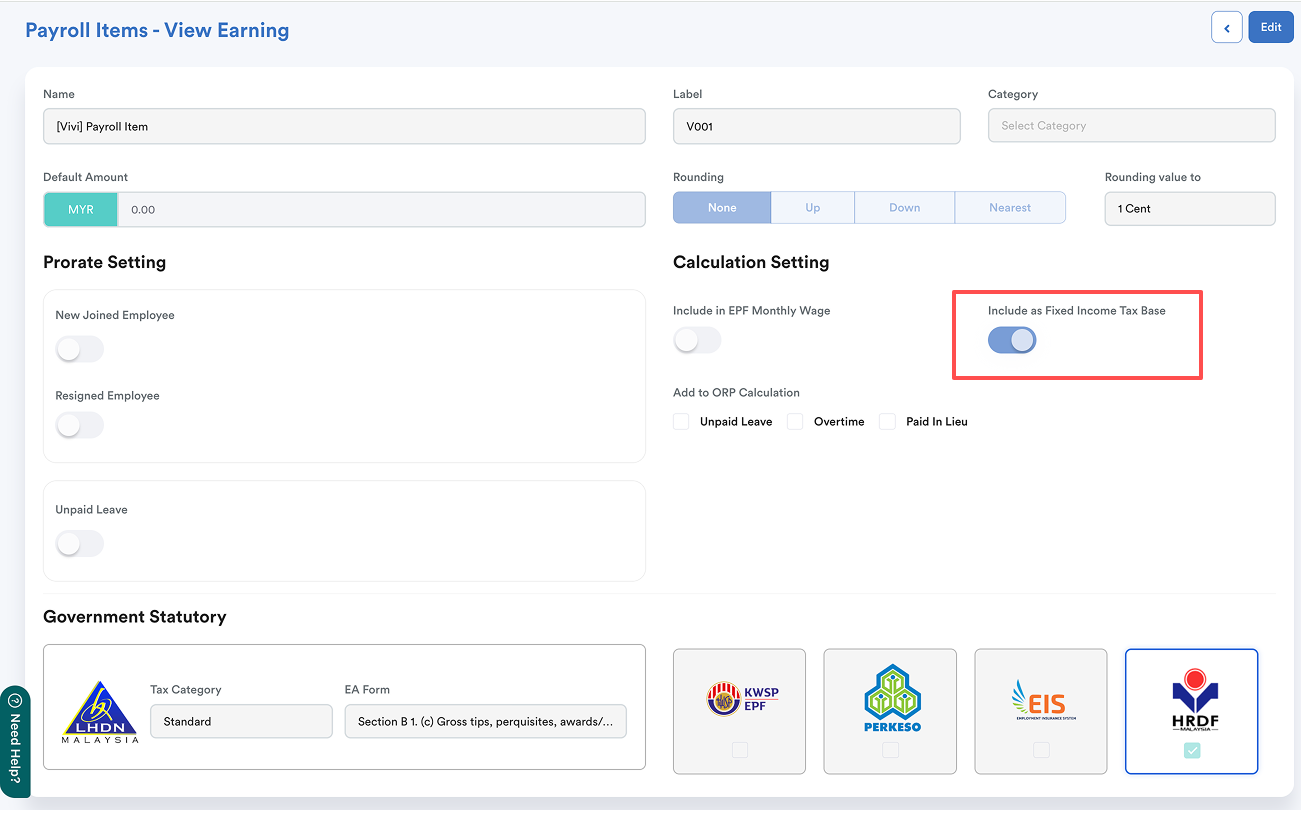
Fixed Income Tax Base
This includes regular, recurring earnings processed every month, such as:
Basic salary
Monthly allowances
Worksy setup: Setting > Payroll > Payroll Items. Enable “Include as Fixed Income Tax Base” for applicable income items.
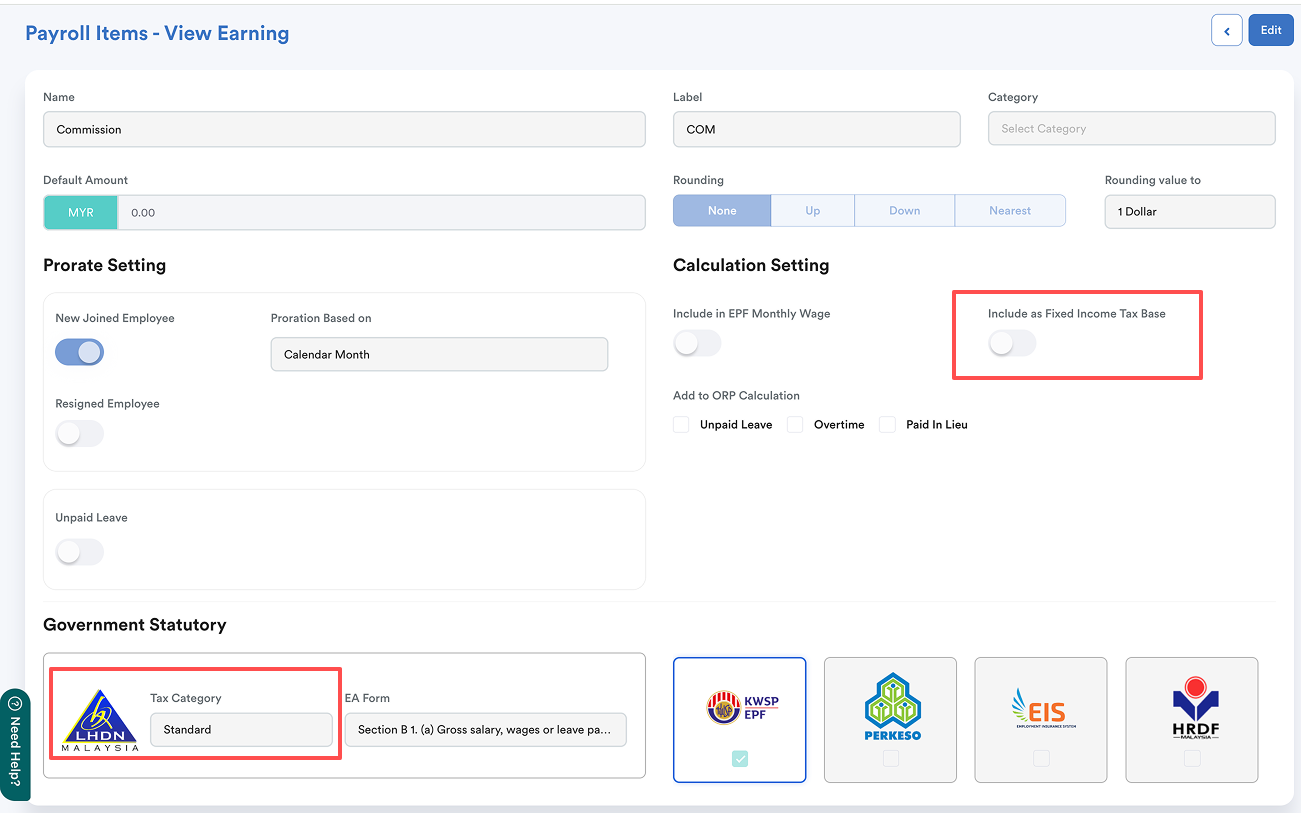
Additional Income Tax Base
This includes non-regular, ad hoc payments such as:
Bonuses
Commissions
One-off allowances or incentives
Other non-recurring payments
Worksy setup: Setting > Payroll > Payroll Items. Mark these items under Standard Tax Category, and disable “Include in Fixed Income Tax Base”.
Summary
The table below provides a quick summary of how different types of remuneration are treated in relation to statutory contributions and deductions in Malaysia. Refer below:
| No. | Remuneration | PCB | |
Fixed | Additional | ||
| 1 | Full-time & Part-time Basic Salary | ✓ | |
| 2 | Overtime | ✓ | |
| 3 | Allowance (not paid monthly) | ✓ | |
| 4 | Commission (not paid monthly) | ✓ | |
| 5 | Fixed Allowance | ✓ | |
| 6 | Bonus/Incentive | ✓ | |
| 7 | Angpao (if processed in payroll) | ✓ | |
| 8 | Unutilized Annual or Medical Leaves | ✓ | |
| 9 | Gratuity | ✓ | |
| 10 | Termination Benefit | ✓ | |
| 11 | Retirement Benefit | ✓ | |
| 12 | Director Fee (not paid monthly) | ✓ | |
13 | Perquisite | ✓ | |
14 | Employee's Share Option Scheme (ESOS) | ✓ | |
| 15 | Tax borne by the employer | ✓ | |
| 16 | Benefit In Kind (BIK) | ✓ | |
| 17 | Value of Living Accommodation (VOLA) | ✓ | |
While this table serves as a general guide, our system is not responsible for any misclassification of income types.
To check tax exempted items and limit, refer to Tax Exempt Items for EA Form Section F.
For other statutory contribution list, please refer to Statutory Deductions and Employer Contributions List.
We hope this explanation clarifies the matter. If you require further assistance, please don't hesitate to contact our support team.
Was this article helpful?
That’s Great!
Thank you for your feedback
Sorry! We couldn't be helpful
Thank you for your feedback
Feedback sent
We appreciate your effort and will try to fix the article